Forestry Mulching in West Alabama
One machine, one pass. Standing brush, briars, saplings and small timber go into the head and come out as mulch on the ground — no piles to burn, nothing to haul, and the dirt left covered when we pull off.
What forestry mulching actually is
A mulching head is a steel drum with carbide teeth that spins fast enough to grind standing vegetation where it stands. We run it on tracked machines, so the whole job is one piece of equipment working across your ground instead of a dozer, a loader and a dump truck all on the clock at once.
Everything the head takes down gets left on the ground as a layer of chipped wood. That layer is the point. It holds your dirt in place through the first hard rain, it breaks down into the soil over a season or two, and it keeps the seed bank from jumping straight back up the way bare scraped ground does.
What it handles, and what it doesn't
Briars, privet, kudzu, sweetgum whips, pine saplings, honeysuckle, greenbrier and standing hardwood up to roughly six to eight inches on the stump — that's the working range on our machines. Bigger than that and we'll tell you straight: it's a dozer job, or a cut-then-mulch job, and we'll price it that way.
Mulching does not remove stumps. The head can grind a stump flush and a little below, but the root ball stays in the ground. If you need stumps out — for a pad, a pond, or a field you're going to disc — that's land clearing or excavating, not mulching.
Where it's the right call
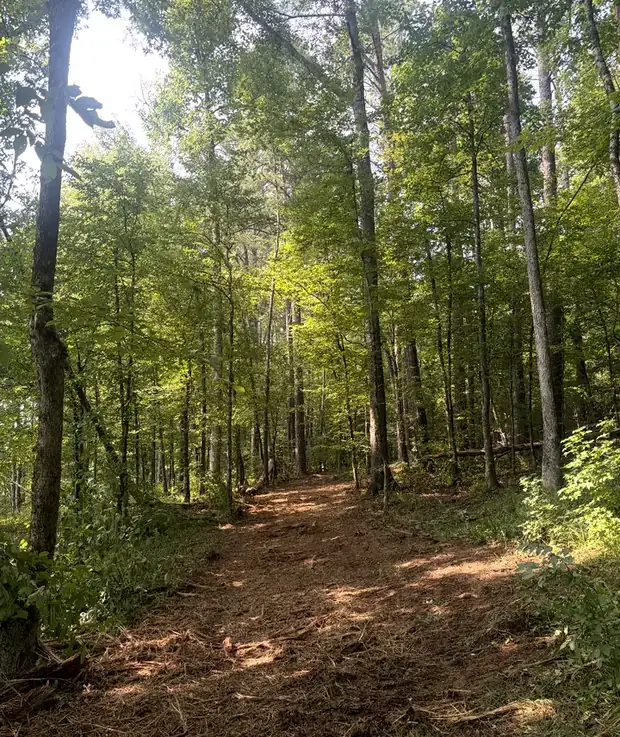
Trails and four-wheeler paths. Fence lines and survey lines that have grown shut. Thinning the understory out of timber you want to keep. Reclaiming pasture that's gone to brush. Shooting lanes, food plots and firebreaks. Opening a view. Cleaning up behind a logging crew. Anywhere you want the ground opened up without tearing it up.
Forestry Mulching across West Alabama
We run forestry mulching out of Berry in Fayette County and cover eight counties from there. Pick yours to see the towns we work in and what the ground is like.
Forestry Mulching — questions we get asked
Does forestry mulching remove stumps?
No. The head grinds standing material down and can take a stump flush with the dirt, but the roots stay. If you need stumps and root balls out of the ground, that's a land clearing or excavating job — tell us up front and we'll price it right.
Will the brush grow back?
Some of it will, and anybody who tells you otherwise is selling you something. Cut stems on species like privet, sweetgum and kudzu send shoots back up. The mulch layer slows it down a lot, and a second pass a year or two later is far cheaper and faster than the first one. If you want it gone for good, the ground has to be worked or sprayed, and that's a different job.
How much can you mulch in a day?
It depends entirely on what's standing. Light briars and saplings move fast; a stand of thick hardwood understory is slow going. We won't quote you an acres-per-day number sight unseen — we'd rather walk the property, or look at it on satellite with you on the phone, and give you a real number.
What's the difference between forestry mulching and bush hogging?
A bush hog is a rotary mower. It cuts grass, weeds and soft stems a couple inches thick, and it leaves the material lying in strands. A mulching head grinds woody material — saplings, brush and small trees — into chips. If you can drive a tractor across it, you probably want a bush hog. If it's grown up in real brush and trees, you want a mulcher.
Related services
- Land ClearingWhen it's bigger than a mulcher can take, the dozer goes to work. Trees pushed, roots raked…
- ExcavatingFootings, trenching, culvert sets, stump and root removal, and the jobs that just need a…
- Site WorkAccess cut in, culverts set, ditching and drainage run so water goes where you want it, laydown…
- House DemolitionOld houses, mobile homes, barns and outbuildings taken down and cleaned up — slab broken out,…
Get a price on your property
Tell us what you're looking at and we'll give you a real number.